
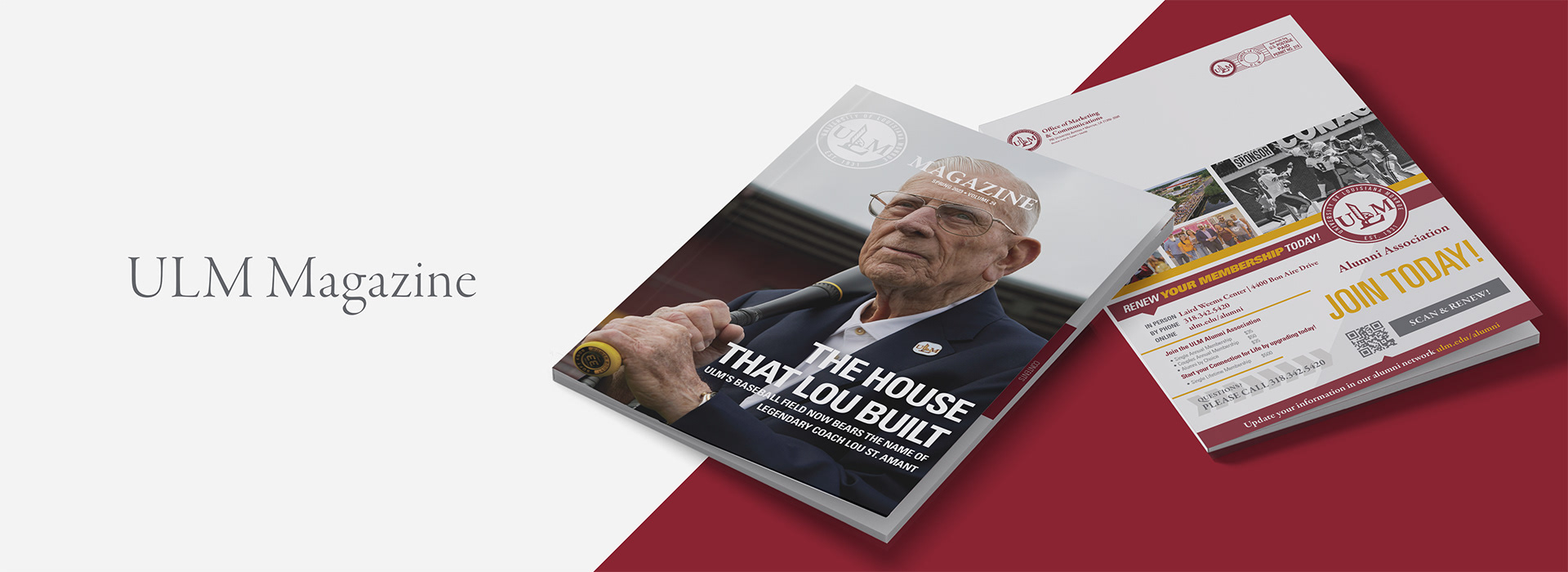
Magazine
Transforming a Publication into a Sustainable Storytelling Platform
OBJECTIVE
When I joined the University of Louisiana Monroe as Creative Director, one of my earliest responsibilities was overseeing the university magazine. The publication faced recurring production delays, inconsistent editorial direction, and a workflow heavily dependent on a volunteer committee whose schedules rarely aligned with publication deadlines.
The objective extended beyond redesigning the magazine. The real challenge was to create a sustainable editorial system capable of consistently telling the university's story while strengthening the institution's brand and engaging alumni, donors, students, faculty, and prospective students.
CHALLENGE
The existing editorial process relied on an external committee to generate story ideas and content. While collaborative in theory, the process created bottlenecks that delayed production and made long-term planning nearly impossible.
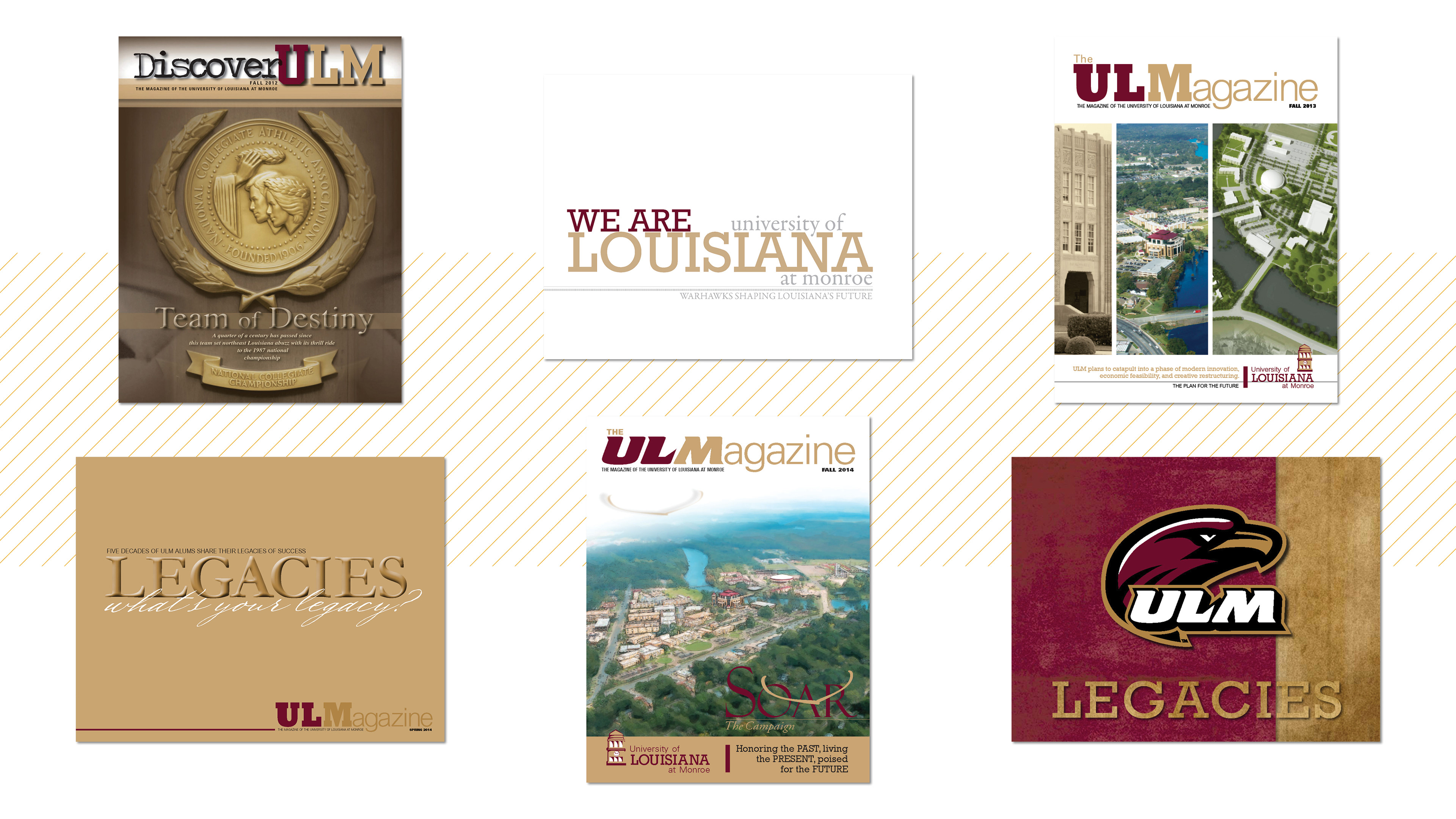
The magazine itself reflected those operational challenges. Editorial structure lacked consistency, visual hierarchy varied from issue to issue, and the publication failed to fully represent the breadth of the university.
During my first production cycle, deadlines became critical enough that I assumed complete responsibility for the publication to ensure it reached print on time. That experience exposed a larger problem, not with the magazine's design, but with the publishing system itself.
INSIGHT
Rather than asking how to produce a better magazine, I asked a different question:
Why are we creating new content when the university already produces compelling stories every week?
The Office of Marketing & Communications published numerous of press releases, feature stories, photography projects, and campus news articles throughout the year. Instead of treating those pieces as one-time communications, they could become the foundation of an editorial publishing strategy.
This shift transformed the magazine from a publication dependent on outside contributors into a curated extension of the university's ongoing storytelling efforts.
STRATEGY
The editorial workflow was rebuilt around three principles:
Content Recycling with Purpose
Existing news stories became the foundation of each issue, allowing editorial resources to focus on refinement rather than constant content creation.
Open Story Discovery
To replace the traditional committee model, a digital submission portal invited faculty, staff, students, and alumni to submit story ideas throughout the year, creating a continuous pipeline of potential features without slowing production.
Editorial Architecture
New recurring sections were established to represent every major university division, from academics and research to student life, athletics, alumni, and advancement. This editorial framework created consistency while allowing each issue to evolve naturally.
DESIGN APPROACH
With the editorial strategy established, the magazine itself was completely redesigned.
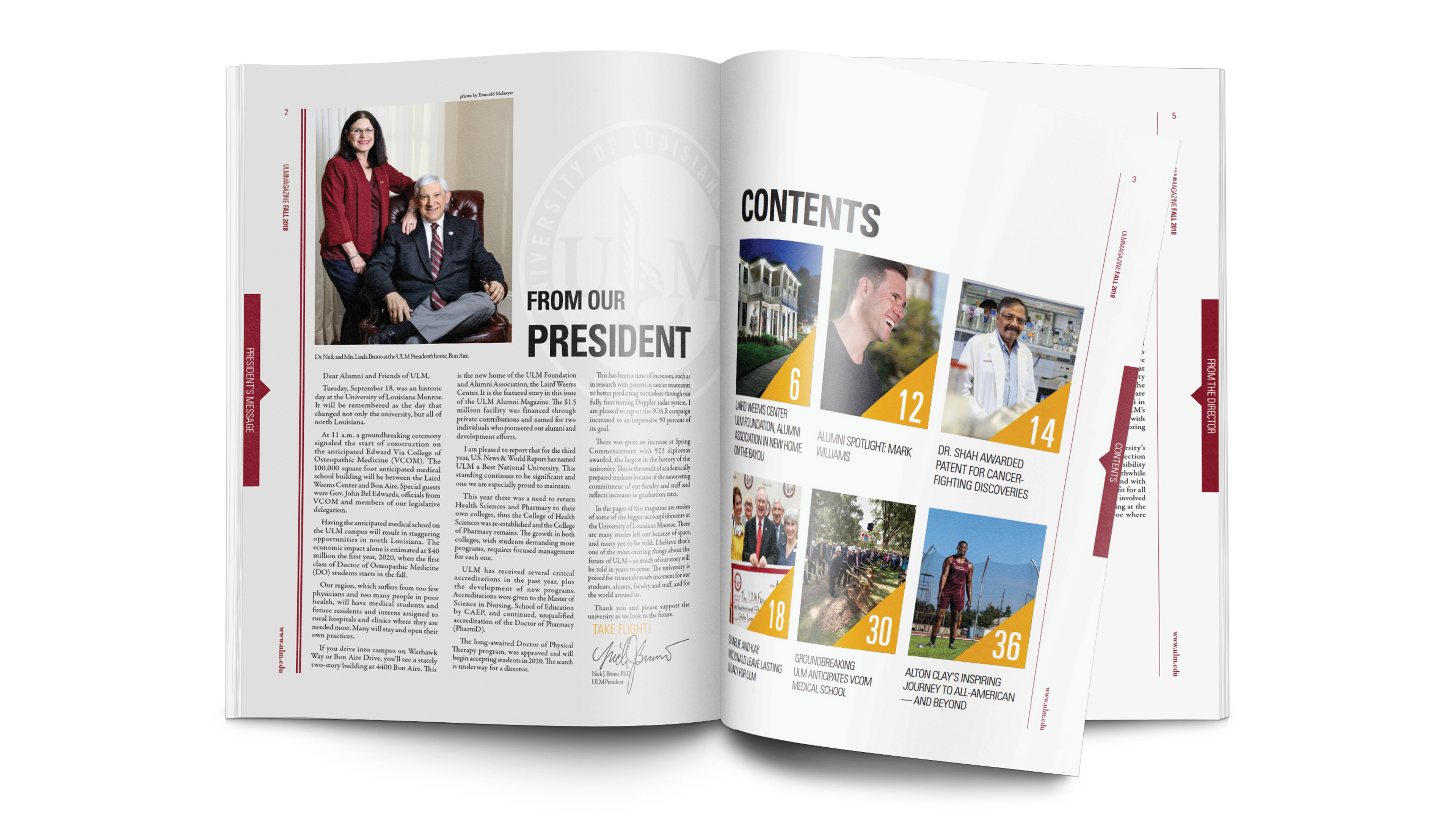
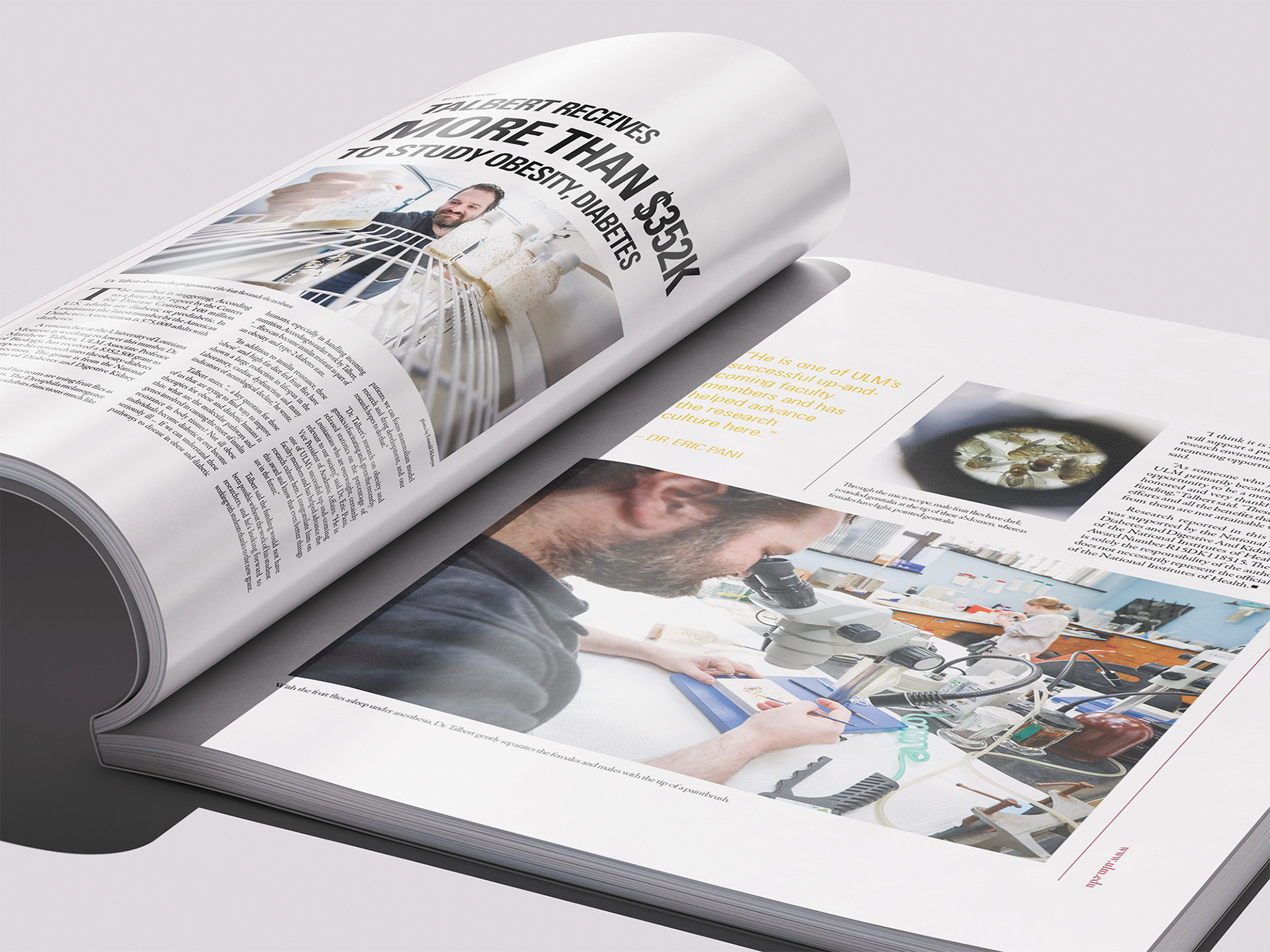
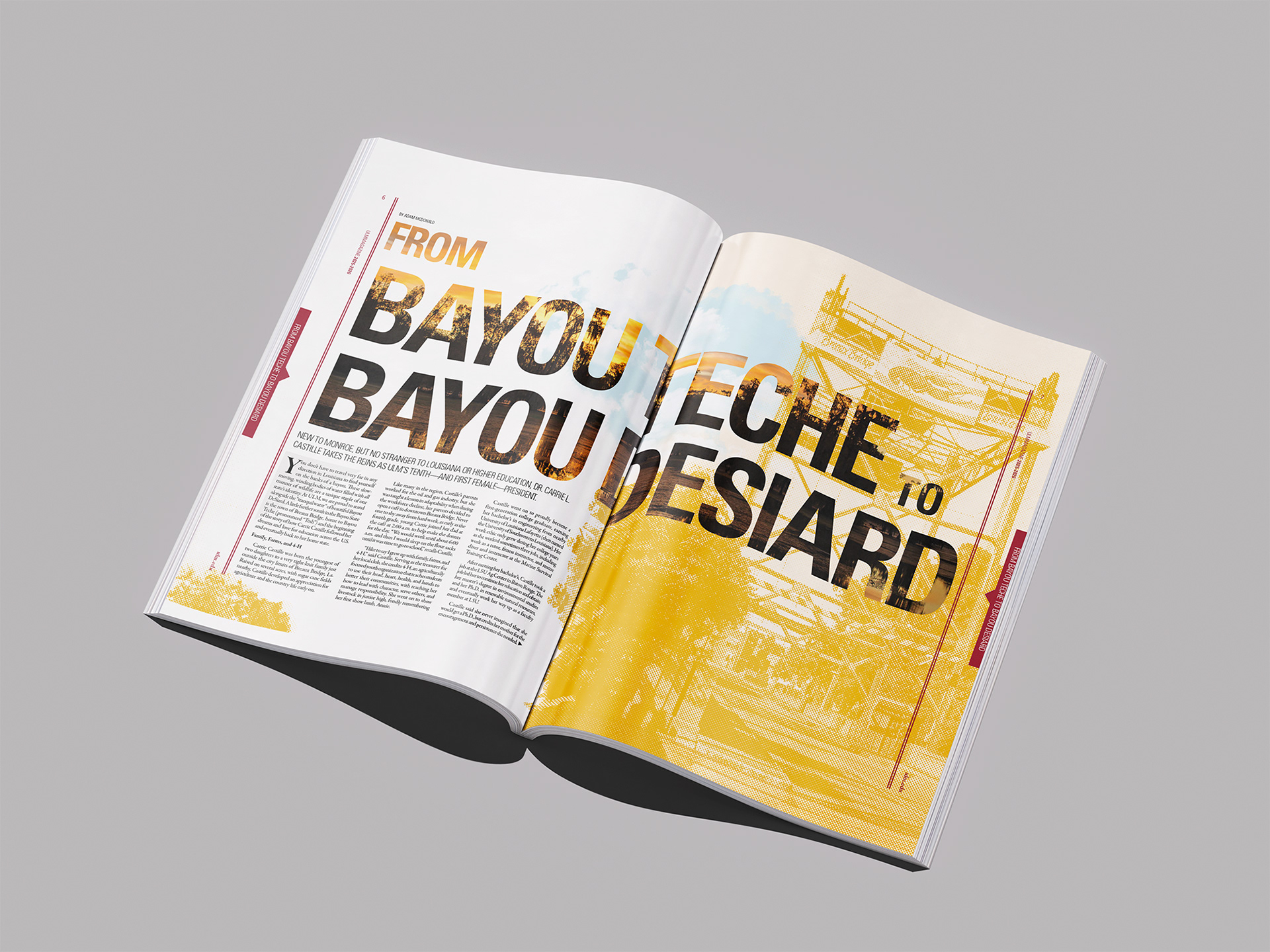
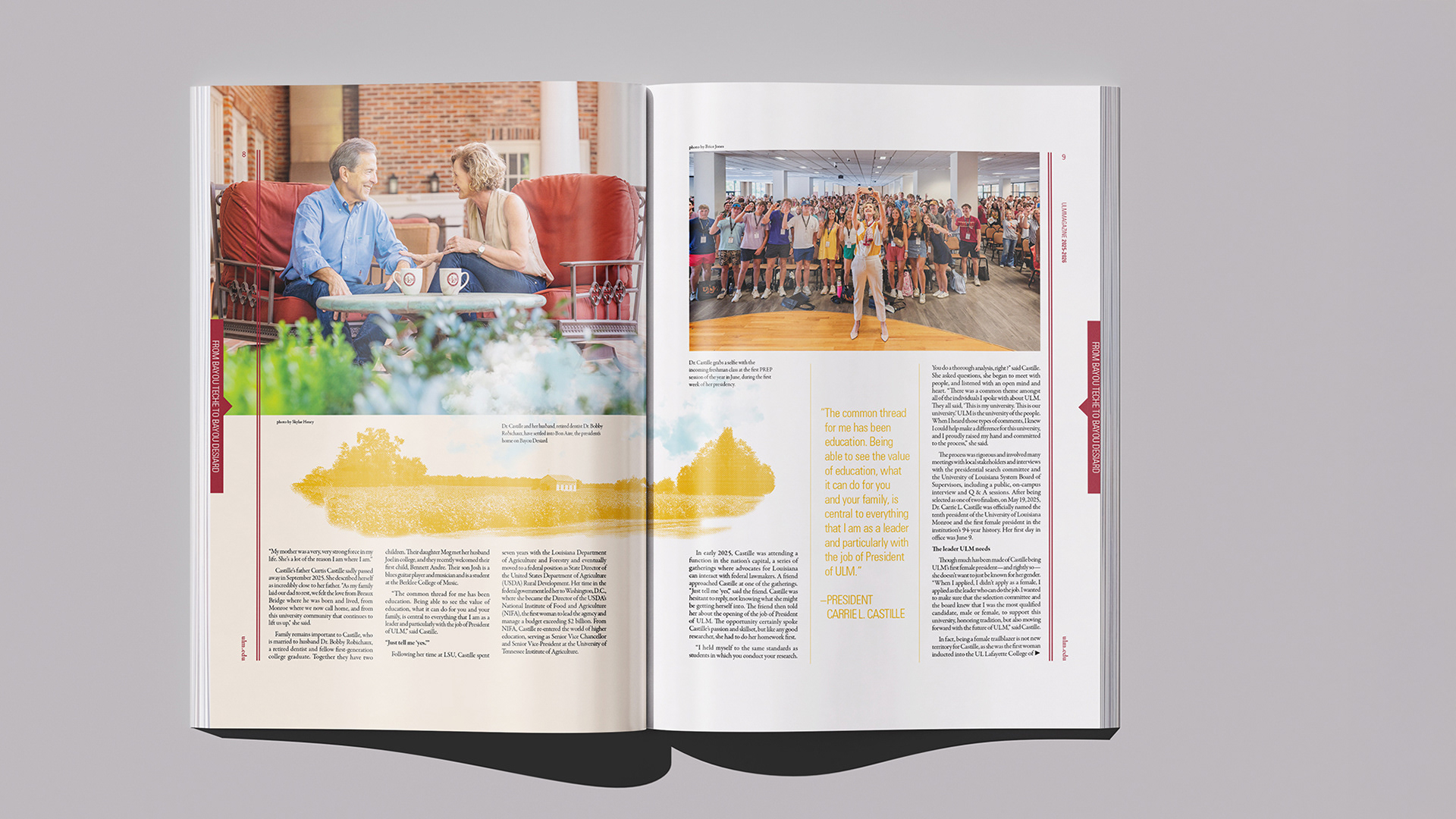
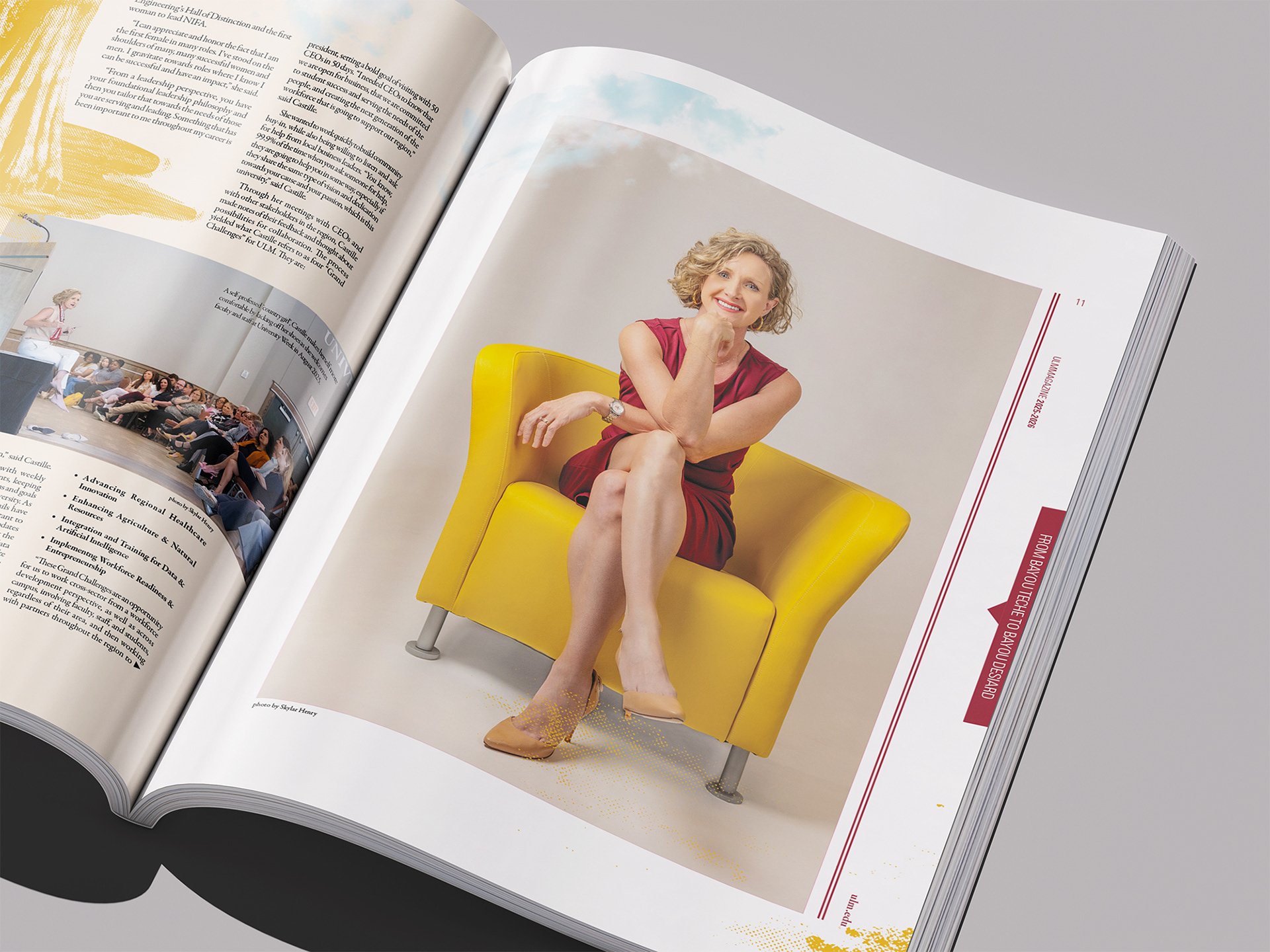
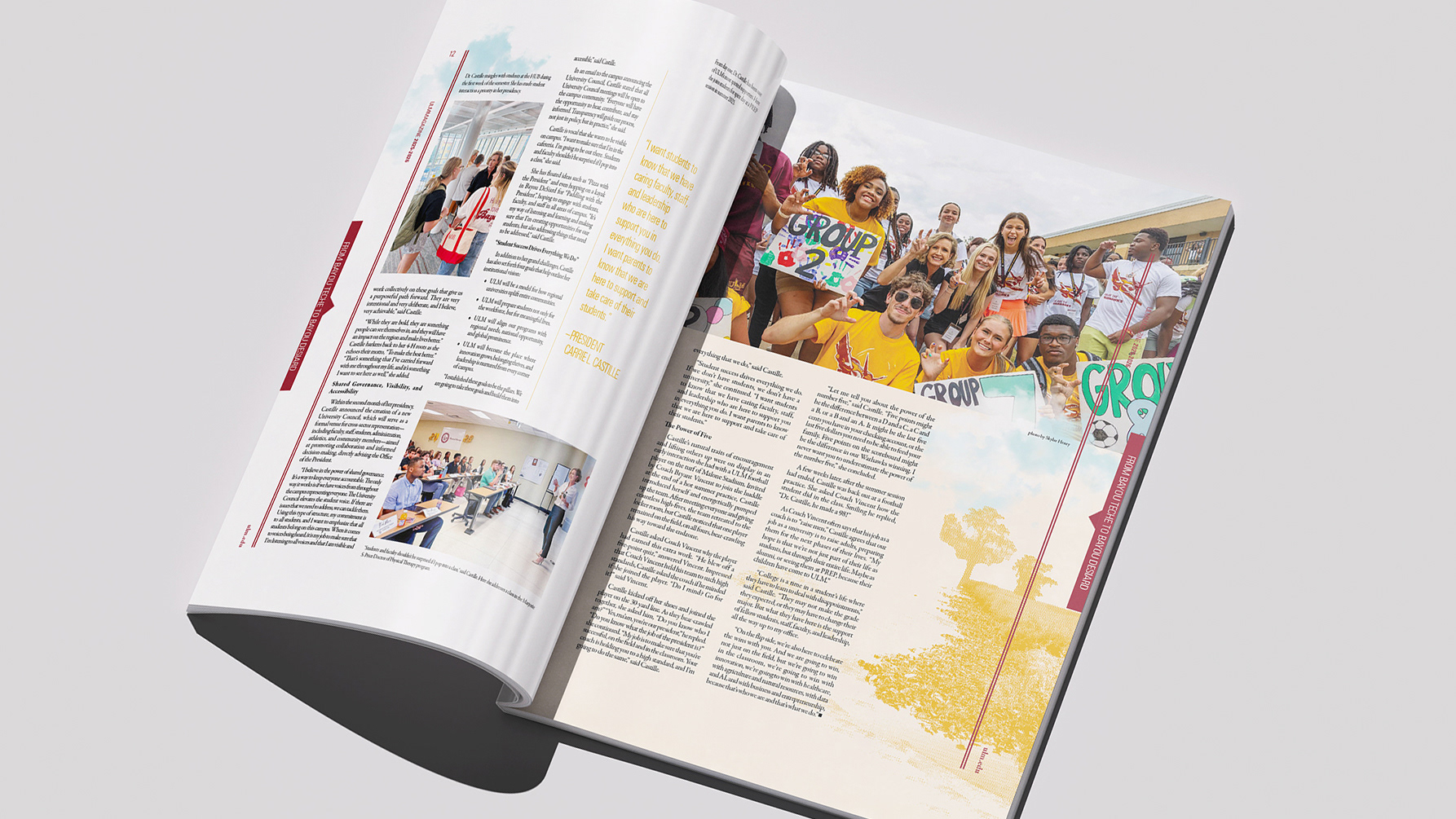
The new publication embraced the university's evolving visual identity through a contemporary editorial system built around typography, photography, white space, and visual rhythm.
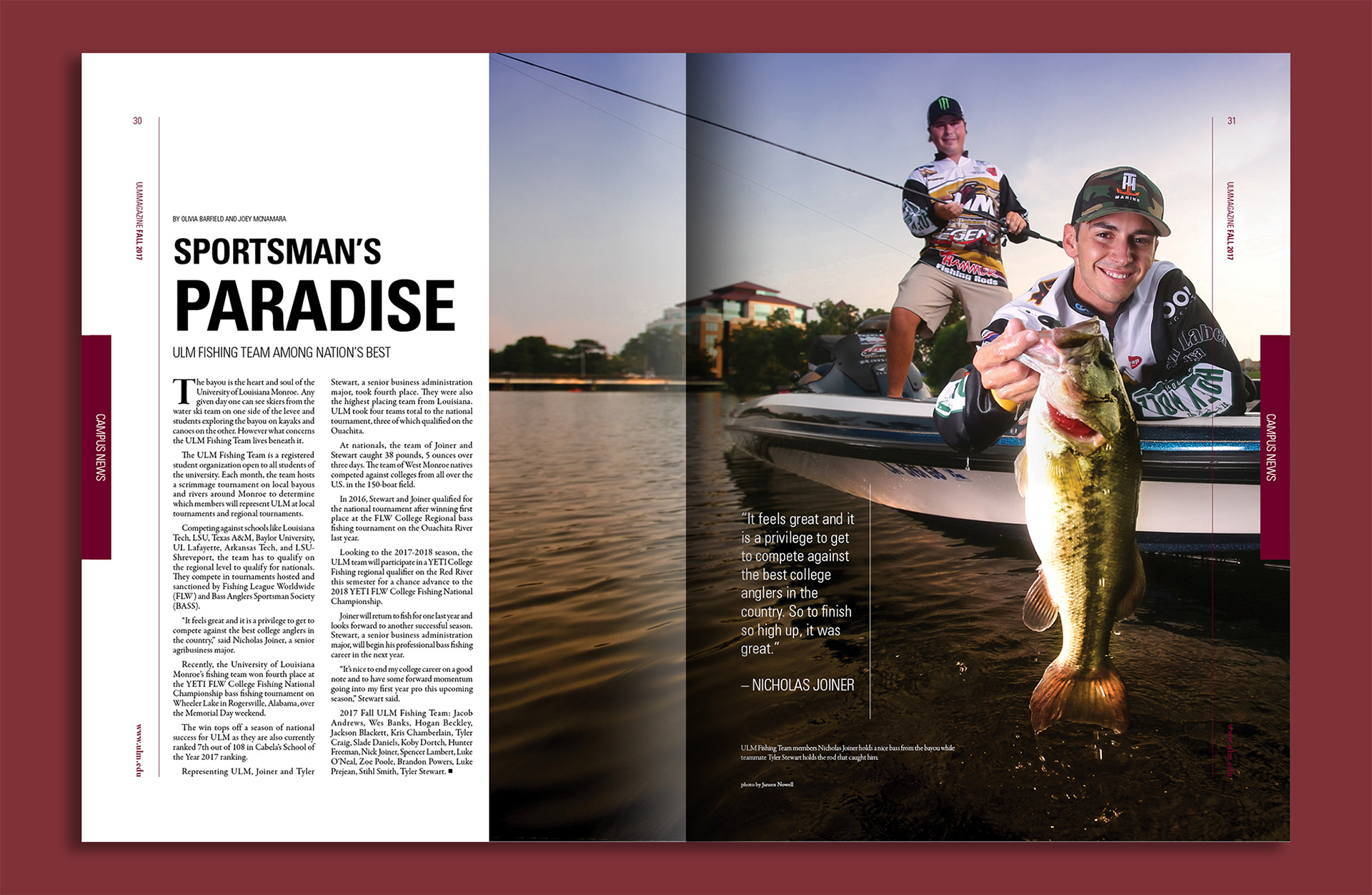
Each issue was intentionally structured around signature moments, including:
• Feature cover story
• Academic college highlights
• Mid-issue visual spread
• Alumni legacy features
• Student success stories
• ULM Foundation
• Athletics
Feature stories were supported with custom photography instead of relying solely on existing imagery. These in-house photo sessions elevated the publication while giving each issue an exclusive treatment.
Rather than simply documenting campus events, the magazine became a storytelling experience.
RESULTS
The new publishing system transformed both production and engagement.
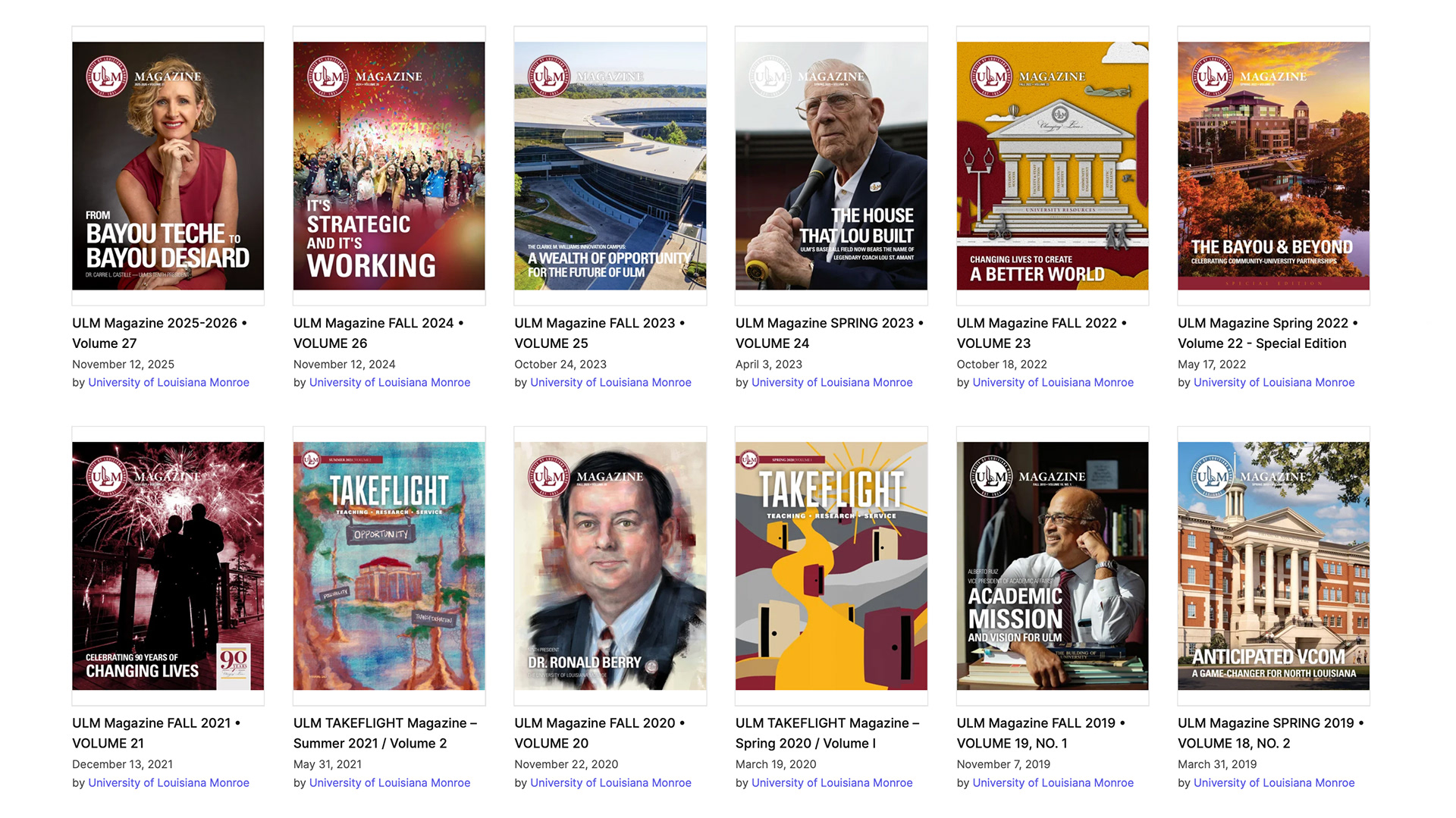
• Increased publication frequency from one issue annually to two editions each year
• Expanded the magazine from 36 pages to 52 pages
• Increased print circulation from 1,500 to 7,000 copies
• Launched the magazine's first digital edition through Issuu, extending distribution through the university website and digital marketing channels
• Digital readership regularly approached 10,000 impressions per issue
• Created a sustainable editorial workflow that significantly reduced production bottlenecks
The publication also strengthened relationships across campus. The Alumni Association and ULM Foundation became active editorial partners, contributing stories that strengthened alumni engagement and donor communications.
The success of the publication ultimately led to an ongoing partnership with BayouLife Magazine, creating a dedicated platform to showcase university stories to a broader regional audience, a collaboration that continues today.
"It definitely got my attention—I stopped, turned around, picked it up, and went back into my office to read it. What an amazing magazine! Thank you for capturing ULM at this moment and sharing it with our alumni, friends, and supporters. ULM is fortunate to have such a talented team."
— Dr. Ronald Berry, President, University of Louisiana Monroe
OUTCOME
What began as an effort to redesign a magazine became a complete transformation of the university's editorial publishing strategy.
By replacing an inefficient production model with a scalable storytelling system, the publication evolved from an annual communication piece into one of the university's most effective brand-building platforms.
More importantly, the systems established during this transformation continue to support editorial planning, alumni engagement, and institutional storytelling years later.